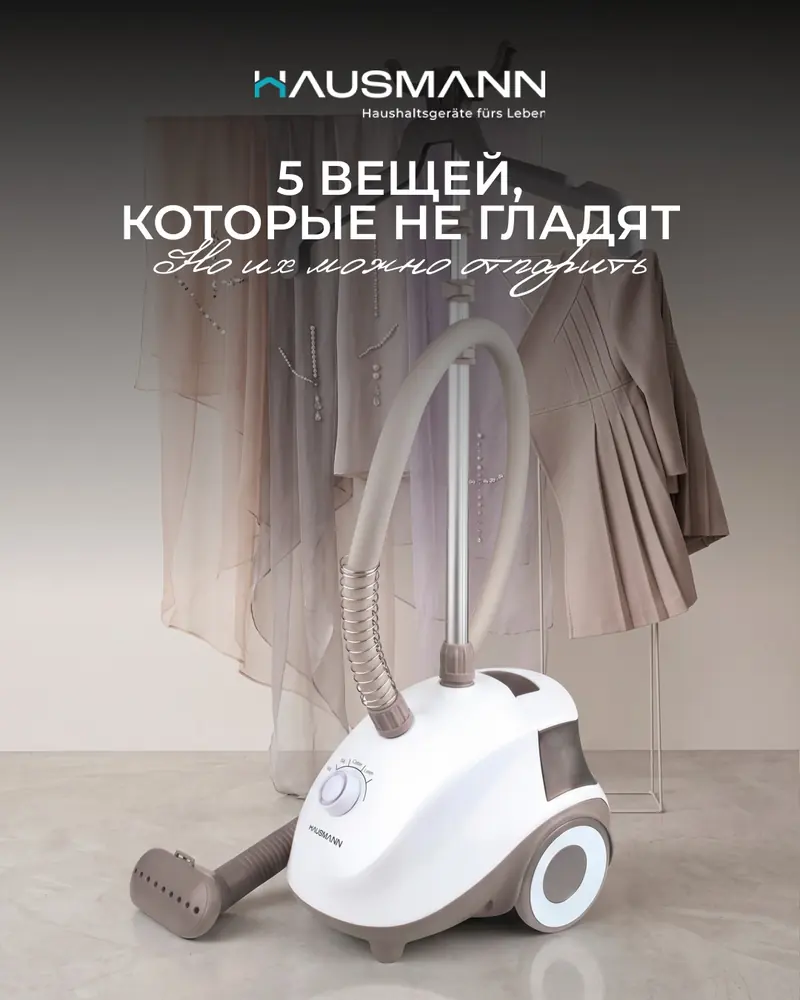
5 things you should steam, not iron
Which items are safer and easier to treat with a garment steamer than with an iron: delicate fabrics, embellished pieces, outerwear, intricate cuts and chunky…
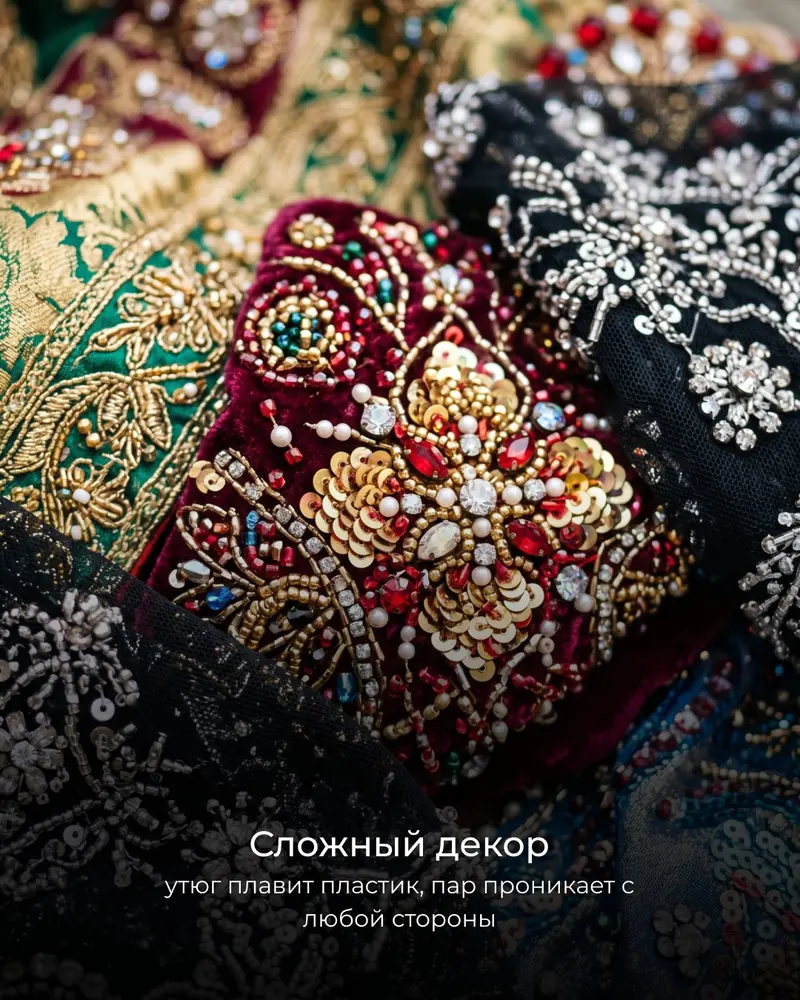

What to steam instead of ironing
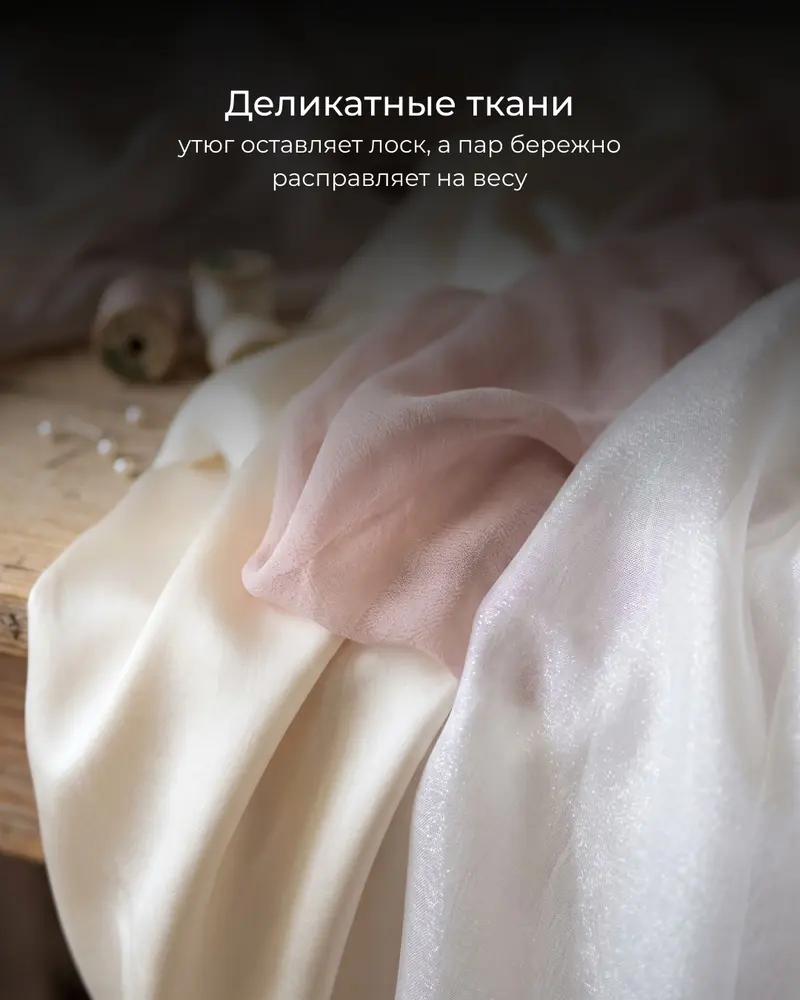
- Delicate fabrics (silk, chiffon, satin): the steam never touches the fabric, so it leaves no marks or shine; an iron leaves a sheen, while steam gently smooths the garment as it hangs.
- Pieces with intricate embellishments (embroidery, beads, sequins, lace): an iron flattens them and can even melt plastic, while steam relaxes the fabric around them and reaches in from any side.
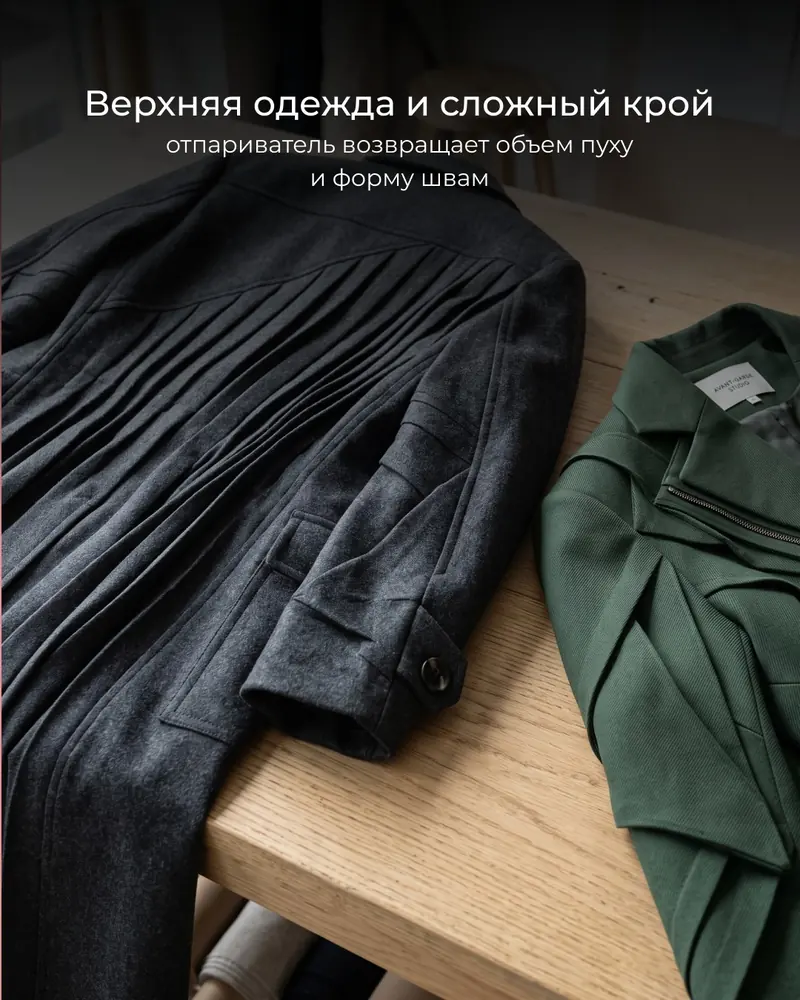
- Outerwear (coats, trench coats): no need to take it off the hanger and lay it on a board — just hang it, work from top to bottom and you're done; the steamer restores loft to down and shape to seams.
- Garments with complex cuts: pleats, flounces, ruffles and puffed sleeves.
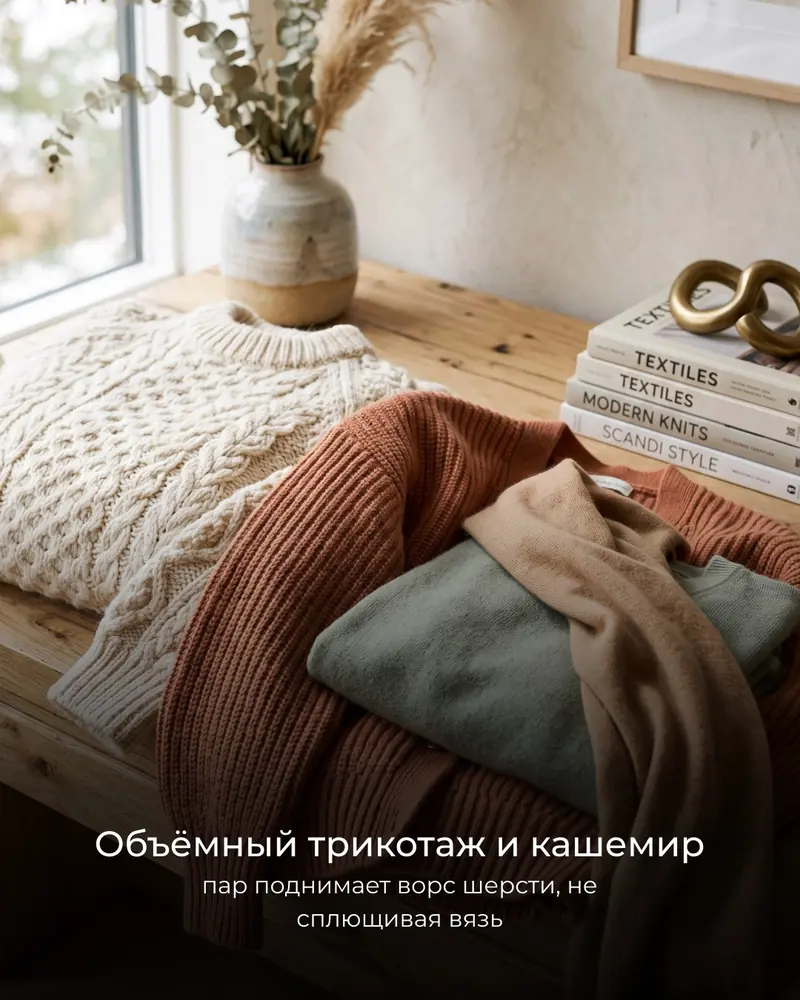
- Chunky knits and cashmere: an iron kills the softness and flattens the stitches, while steam lifts the wool fibers and brings back the garment's fluffiness.
Life hack
- Hold the steamer 2–3 cm from the fabric and gently pull it taut with your free hand — creases will disappear faster.
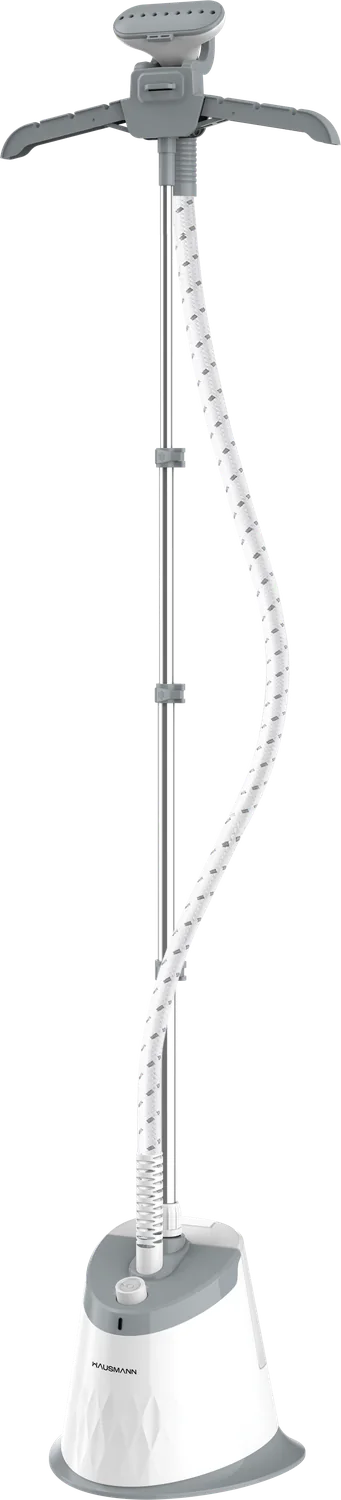 HGS-8060 Garment Steamer
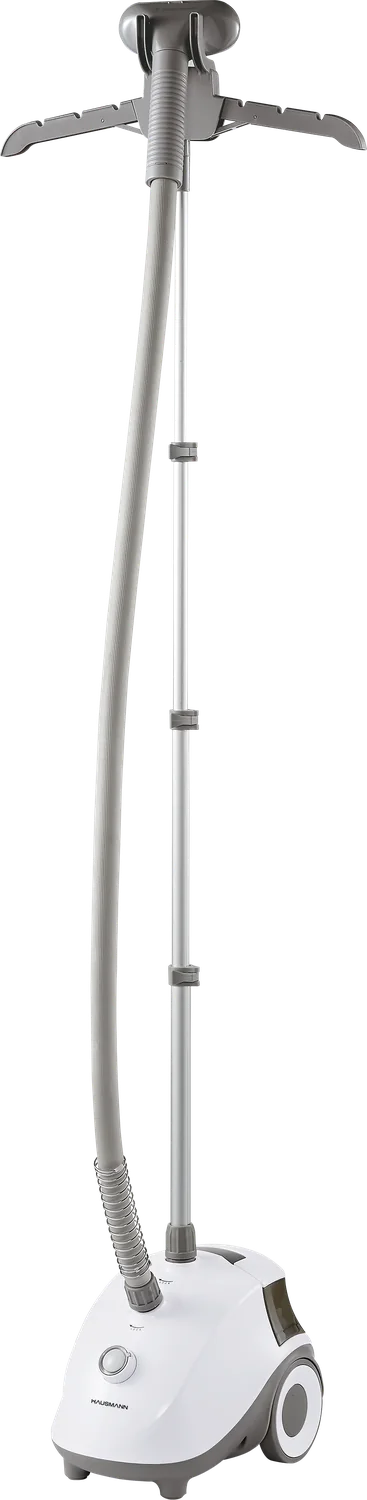 HGS-8070 Garment Steamer
More tips
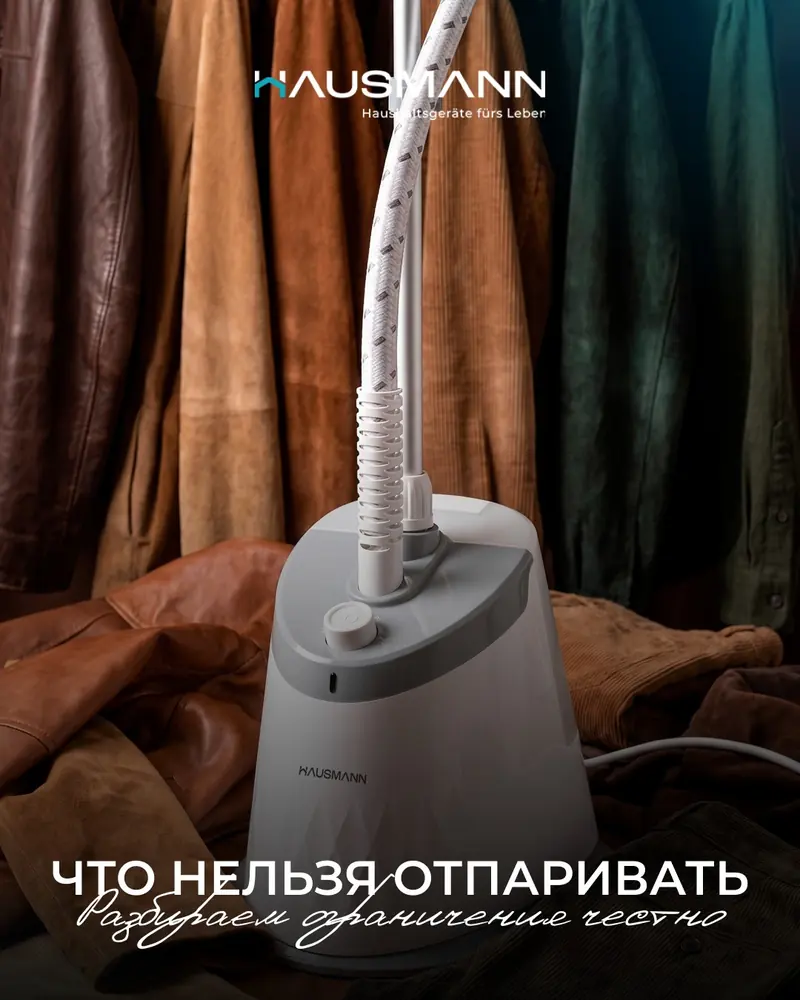
What not to steam
A garment steamer is versatile, but not all-powerful: corduroy and velvet, items with grease stains, leather and suede all need a different approach. Cotton, linen, wool, cashmere, synthetics and knitwear, on the other hand, can always be steamed.
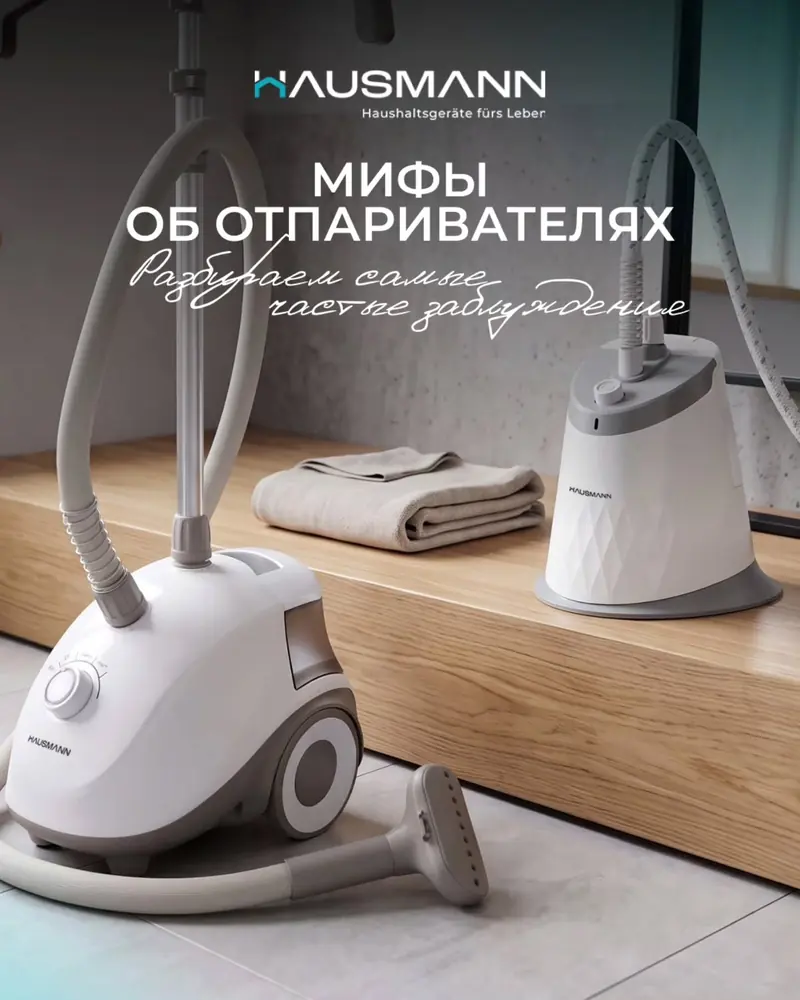
Garment steamer myths
We bust four common myths about garment steamers: how well they handle heavy fabrics, how safe they are for delicate materials, how fast they are and how easy they are to use.

How to choose a garment steamer
A short three-question guide: how often you iron, what fabrics are in your wardrobe and whether you need a steamer for travel. Plus a spec comparison of two HAUSMANN upright models at the end.